

UI/UX Design for Mind Mobile App (Mental Health Application)
Project Description
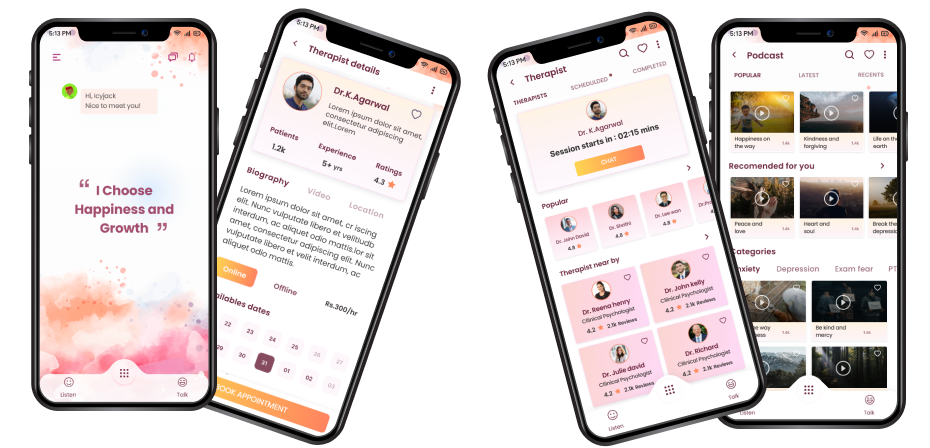
We delivered a comprehensive UI/UX design for the Mind Mobile App, a mental health application designed to provide users with the tools and resources needed to manage their mental well-being. The app combines features such as mood tracking, meditation exercises, stress management tips, and access to mental health professionals. Our design aimed to create a supportive, intuitive, and calming environment for users to engage with the app regularly, ensuring they can easily track their progress and access mental health resources when needed. We focused on enhancing the app’s usability, promoting a positive user experience while prioritizing accessibility and privacy.
Problem Statement
The existing mental health apps lacked personalization and were often overwhelming for users, especially those dealing with anxiety or depression. The primary challenges included:
- Overwhelming User Interface: Many apps had cluttered interfaces, making it difficult for users to find the resources or tools they needed.
- Lack of Personalization: Users needed a more tailored experience that could adapt to their specific mental health needs and progress.
- Emotional Tone: The design of many apps failed to create a calming environment, which is crucial for mental health management.
- Engagement and Retention: Many mental health apps struggled with user engagement and long-term retention due to their impersonal or rigid structures.
Solutions
Our solution was to design a clean, calming, and easy-to-navigate UI/UX that helped users feel supported and motivated to use the app regularly. Key solutions included:
- Personalized Experience: We implemented features like mood tracking and personalized recommendations for exercises and content based on the user’s input and progress.
- Calming Aesthetics: The design focused on calming colors, smooth animations, and intuitive navigation to create a stress-free environment for users.
- Streamlined User Flow: Simplified the navigation, making it easy for users to track their mood, access resources, and connect with mental health professionals without feeling overwhelmed.
- Engagement Features: We incorporated reminders, progress tracking, and content recommendations to encourage regular usage and sustained engagement.
Design Process
Our design process adhered to the Design Thinking methodology to ensure we addressed the emotional and practical needs of users while creating an effective and calming mental health tool. The process included the following stages:
- Empathize:
We began by interviewing potential users to understand their needs, struggles, and what they would want from a mental health app. We gathered feedback from people with varying levels of experience with mental health apps, including those with anxiety, depression, and stress-related issues. - Define:
Based on our research, we defined the problem clearly: users need a mental health app that provides personalized, calming, and easy-to-access tools to track their mental well-being. The app should be simple to use and provide support without overwhelming users. - Ideate:
In this phase, we brainstormed ideas for features that would address the emotional and practical needs of the users. We explored options for mood tracking, personalized content, and how to present mental health resources in a non-overwhelming way. - Design:
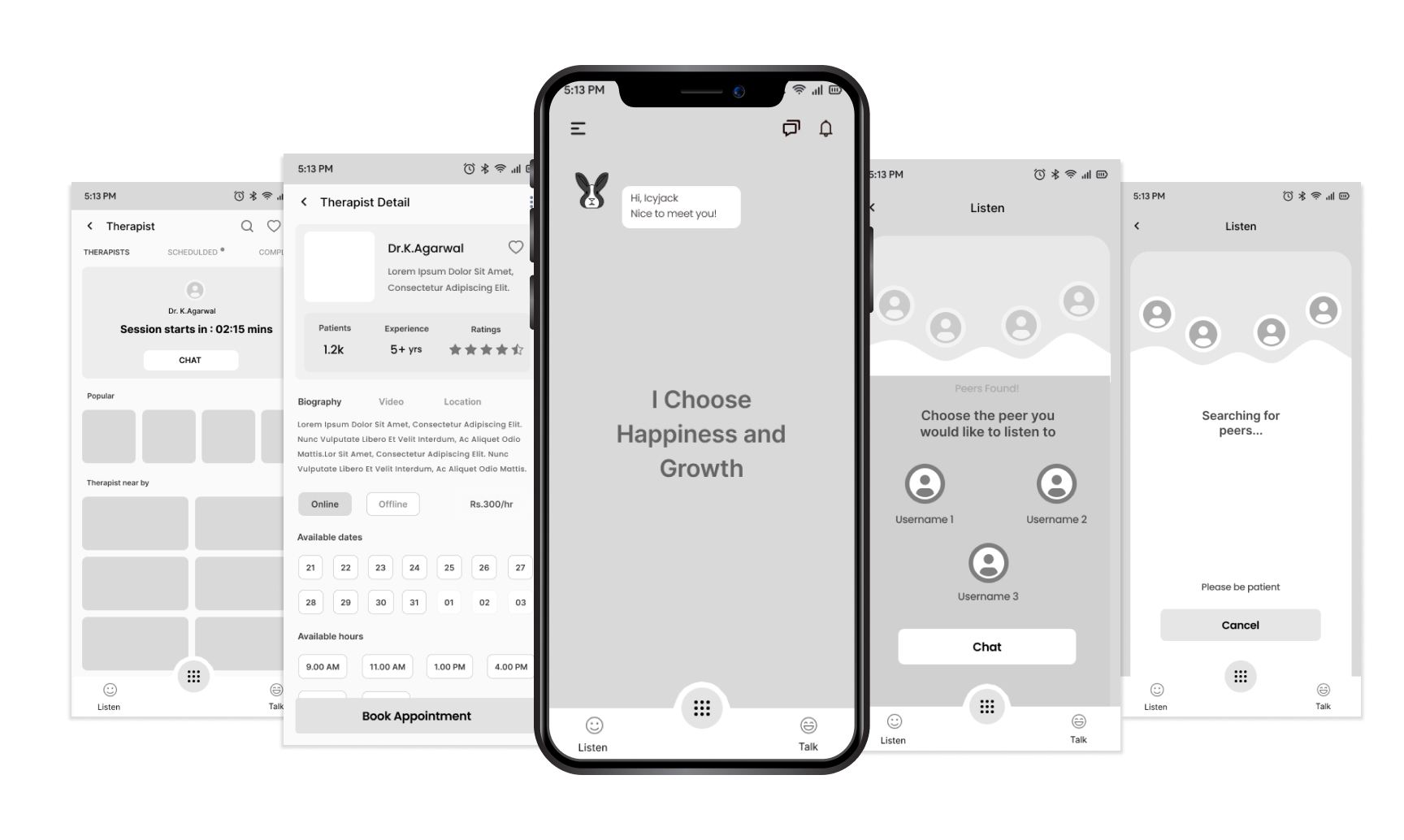
We created wireframes and high-fidelity mockups that reflected a minimalist design approach, using soft colors and intuitive navigation. We focused on ensuring the app was accessible for all users, including those with limited tech experience. Interactive prototypes were created to test flow and usability. - Test:
After creating interactive prototypes, we conducted usability testing with a group of users. Feedback was gathered on how intuitive the app was, how calming the design felt, and how easy it was for users to navigate and track their mental health progress. Based on this feedback, we refined the design to improve user flow and engagement.
User Personas
- Casual User: Someone looking for an easy and accessible way to track their mood and receive daily tips for mental well-being. They need simplicity and a low-effort interface.
- Active User: A person who actively uses the app to manage their mental health, looking for personalized content, meditation exercises, and progress tracking. They appreciate regular reminders and feedback on their progress.
- Therapy-Seeking User: Someone seeking professional help and using the app to track their emotions and communicate with therapists. They need secure, easy access to professional support and progress reports.
- First-Time User: A user who is new to managing their mental health and needs gentle onboarding with step-by-step guidance on using the app’s features effectively.
Wireframes
UI Design

Contact Us
- Email: info@satyaki.co.in
- Phone: +(+91) – 7411767400
- Website: www.satyaki.co.in
- Location: Bengaluru, India